
On this page
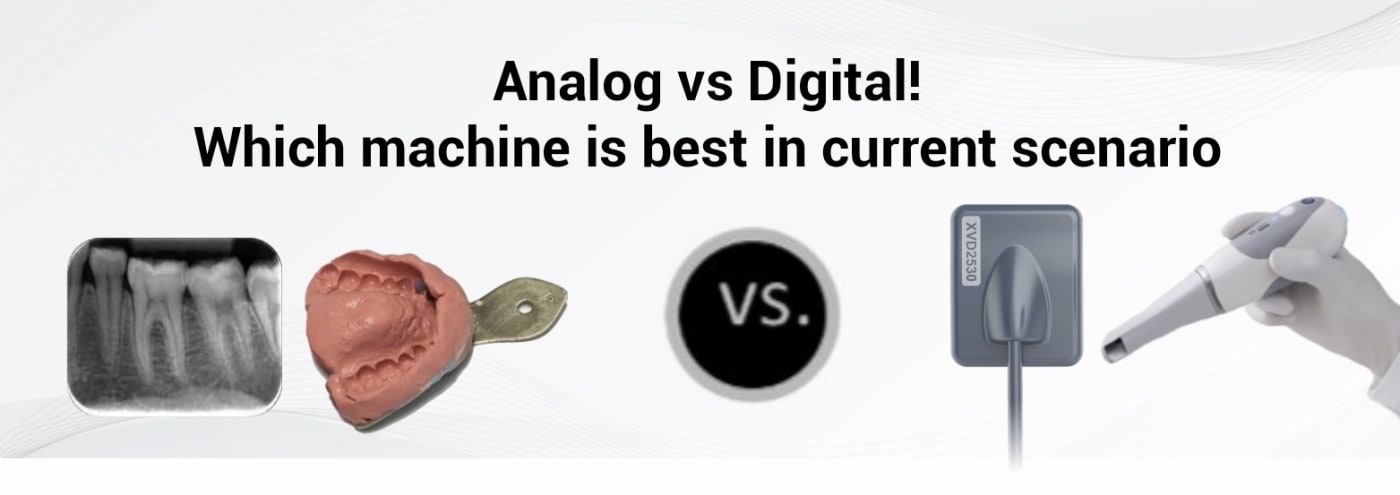
Analog and Digital dentistry are two different approaches to providing dental care.
Analog Dentistry:
Analog dentistry refers to the traditional methods of performing dental procedures, which rely on manual tools and techniques.
This includes procedures such as taking impressions, creating dental models, and shaping teeth with manual tools such as drills, burs, and other instruments.
Digital Dentistry:
On the other hand, Digital Dentistry involves the use of advanced technology to improve the accuracy, efficiency, and precision of dental procedures.
This includes the use of computer-aided design (CAD) and computer-aided manufacturing (CAM) technologies, digital x-rays, and 3D printing in the procedures such as digital impressions, computer-aided design of dental restorations, and the use of digital tools such as lasers and intraoral cameras.
FEATURES:
Here are some of the key differences between analog and digital dentistry:
- Accuracy: Digital dentistry is often more accurate than analog dentistry. For example, intraoral scanners can capture precise measurements of a patient’s teeth, which can then be used to create a 3D model of the patient’s mouth. This can help dentists create more accurate dental restorations, such as crowns and bridges.
- Efficiency: Digital dentistry can often be more efficient than analog dentistry. For example, digital impressions can be captured much more quickly than traditional impressions, which can save time for both the dentist and the patient.
- Patient experience: Digital dentistry can improve the patient experience in several ways. For example, intraoral scanners are less invasive than traditional impressions, which can help patients feel more comfortable during the dental appointment.
- Cost: Digital dentistry can be more expensive than analog dentistry, as it often requires more expensive equipment and training.
However, digital dentistry can also reduce costs in other areas, such as reducing the need for physical impressions and decreasing the need for multiple appointments.
Advantages of Analog Dentistry:
Dentists who are experienced in analog dentistry have a tactile and visual sense of the work they are doing and can feel the resistance of the tooth or gum tissue when performing procedures.
Patients may feel more comfortable with the traditional approach, as they can see the work being done and may feel more involved in the process.
Advantages of Digital Dentistry:
Digital dentistry can be faster and more precise than analog dentistry, resulting in less time spent in the dentist’s chair and fewer appointments needed for a single treatment.
The use of digital tools can reduce discomfort and pain during procedures, as well as the need for local anesthetic in some cases.
The accuracy and precision of digital dentistry are typically higher, as it relies on computerized systems rather than the dentist’s manual dexterity.
For example, CAD/CAM technology can be used to create customized dental restorations, such as crowns and bridges, in a single visit to the dentist, rather than requiring multiple appointments.
Digital dentistry also allows for more efficient communication between dental professionals and with patients, as digital records can be easily shared and accessed.
Disadvantages of Analog Dentistry:
Analog dentistry can be time-consuming and may require multiple appointments for a single treatment.
The accuracy and precision of analog dentistry may be limited, as it relies on the dentist’s manual dexterity.
Disadvantages of Digital Dentistry:
Digital dentistry requires specialized equipment and software, which can be expensive and may not be available in all dental offices.
Some patients may feel less comfortable with the use of technology in dental procedures and may prefer a more traditional approach.


 Shinning 3D Autoscan DS EX Pro Lab Scanner
 E2 | E3 | E4 Red Generation Lab Scanners
 3shape F8 Lab Scanner
Disclaimer
This article is for general information. Product specifications and features change with the manufacturer — confirm details with our team before you buy. Full disclaimer