

Introduction: The Evolution of Dental Imaging
Dental imaging has come a long way from traditional 2D X-rays to advanced 3D imaging, significantly improving diagnostic accuracy and treatment planning. While 2D radiographs have been a standard tool for years, they often come with limitations in depth perception, anatomical distortion, and incomplete visualization. Dentists using only 2D imaging may struggle to detect hidden infections, bone loss, or precise nerve positioning, leading to less predictable treatment outcomes.
The introduction of 3D imaging, particularly Cone Beam Computed Tomography (CBCT), has revolutionized dental diagnostics. Unlike conventional X-rays, CBCT provides a detailed 360-degree view of the patient’s teeth, bone structure, nerve pathways, and soft tissues, allowing for highly precise and patient-specific treatment planning. This advancement is especially crucial in implantology, orthodontics, endodontics, and oral surgery, where precision is key to success.
One of the most cutting-edge CBCT systems available today is the Genoray Papaya 3D CBCT. It offers high-resolution imaging with minimal radiation exposure, making it a safer and more effective option for both dentists and patients. The system’s versatility in capturing detailed 3D scans for various dental procedures ensures that clinicians have a complete picture before proceeding with any treatment.
This blog will explore why 3D imaging is now an essential tool in modern dentistry, focusing on its advantages in diagnostics, treatment planning, and overall patient care. As dental technology advances, embracing 3D imaging solutions like the Genoray Papaya 3D CBCT will be crucial for clinics looking to provide accurate, efficient, and high-quality dental care.
Superior Diagnostic Accuracy with 3D Imaging
Achieving highly accurate diagnostics is crucial in dentistry, and Cone Beam Computed Tomography (CBCT) has become an indispensable tool for detailed visualization and precise treatment planning. Unlike traditional 2D X-rays, which offer only flat, limited views of dental structures, CBCT imaging captures high-resolution, three-dimensional scans, allowing dentists to assess bone quality, nerve pathways, and hidden dental issues with unparalleled clarity.
One of the standout CBCT systems, the Genoray Papaya 3D CBCT, enhances diagnostic precision by providing clear, distortion-free 3D images with minimal radiation exposure. This advanced imaging system enables dentists to detect cysts, impacted teeth, periapical infections, and even early signs of bone loss, which might go unnoticed with conventional imaging techniques.
Accurate visualization of bone density and nerve positioning is particularly critical for dental implant placement, orthodontics, and complex root canal treatments. The Genoray Papaya 3D CBCT allows dentists to measure anatomical structures with millimeter precision, ensuring flawless implant positioning, reduced surgical risks, and improved treatment outcomes.
By incorporating high-resolution 3D imaging into clinical workflows, dental professionals can prevent treatment failures, enhance patient safety, and improve long-term oral health results. With CBCT technology like the Genoray Papaya 3D CBCT, dentists can make data-driven decisions, ensuring minimally invasive, highly successful treatments for their patients.


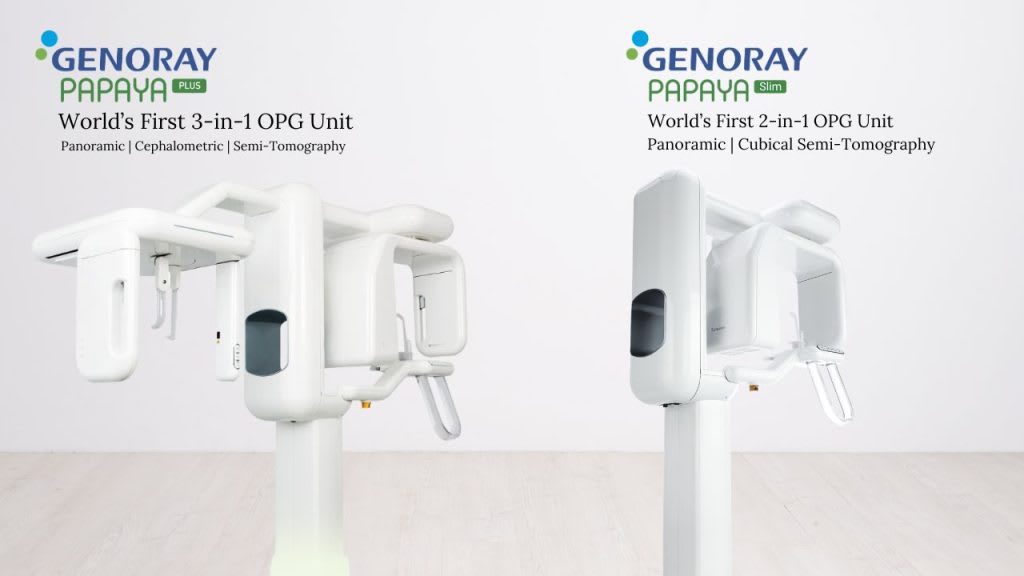 Dental OPG – GENORAY PAPAYA CUST
 Dental CBCT Machine – Genoray PAPAYA 3D PLUS
 Dental CBCT Machine – GENORAY PAPAYA 3D PREMIUM PLUS
 Genoray Port X-II
 Genoray Port X-III
 Runyes Portable X-ray
 Xpect Vision Intraoral Sensor
 Carestream RVG CS 5200
 Gnatus Timex 70 E AC X-Ray Machine
Disclaimer
This article is for general information. Product specifications and features change with the manufacturer — confirm details with our team before you buy. Full disclaimer