
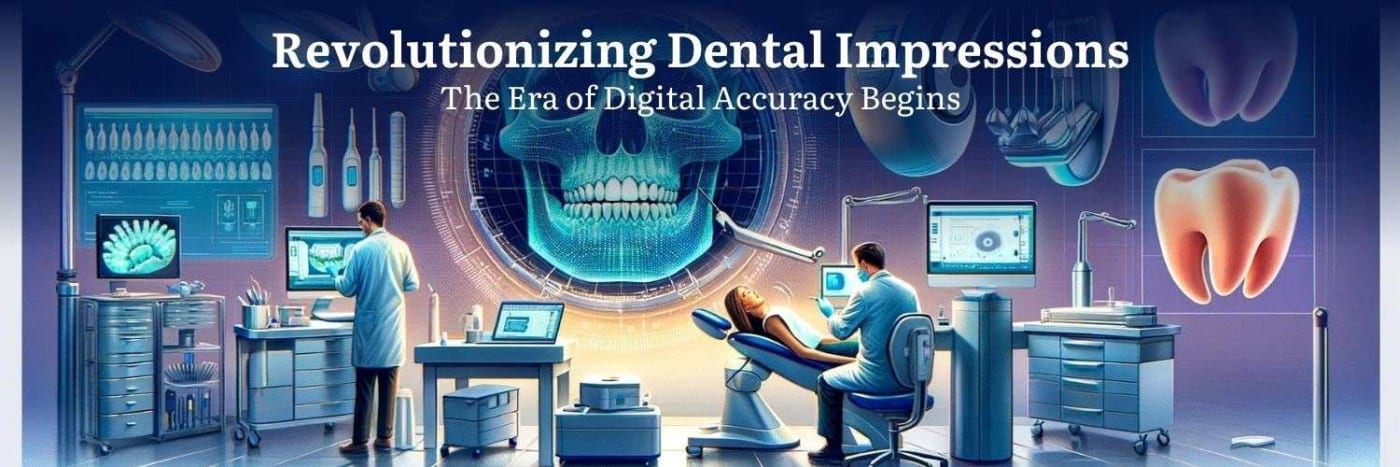
The journey of dental impressions has been a long and evolving path, from the early days of alginate and plaster to the sophisticated digital solutions of today. Traditional dental impression techniques, while foundational in the history of dentistry, have presented challenges both for the dental professional and the patient. These methods, often described as cumbersome and uncomfortable, involved the physical molding of the patient’s teeth using various materials that would then set to form an impression. Although effective for many years, this approach was not without its drawbacks, including potential inaccuracies due to material shrinkage or expansion, discomfort for patients, and a time-consuming process for both preparation and analysis.
The advent of intraoral scanning technology marks a significant shift towards digital accuracy in dental impressions. This revolutionary approach has transformed the landscape of dental diagnostics and treatment planning, introducing a level of precision and patient comfort previously unattainable. Intraoral scanners employ advanced optical technology to capture highly detailed 3D images of a patient’s dental anatomy, eliminating the need for physical molds. This transition to digital dental impressions signifies more than just an improvement in efficiency; it represents the beginning of a new era in dentistry where digital orthodontics solutions and precision dental imaging converge to enhance patient care.
As we delve deeper into the capabilities and advantages of intraoral scanning technology, it becomes clear that this innovation is not merely a new tool in the dentist’s arsenal. It is a paradigm shift in how dental professionals approach the task of capturing dental anatomy, offering a glimpse into the future of dentistry—a future where digital accuracy and non-invasive procedures set a new standard for excellence in dental care.
The Rise of Intraoral Scanners in Modern Dentistry
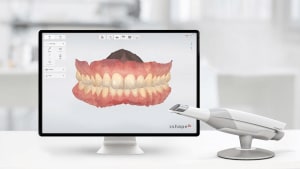
Intraoral scanners represent a significant leap forward in the field of dentistry, marking a departure from traditional dental impression techniques that often required the use of alginate or silicone-based materials. These traditional methods, while effective, could be uncomfortable for patients, time-consuming, and sometimes less precise. The introduction of intraoral scanning technology has revolutionized this aspect of dental care, offering a seamless, accurate, and patient-friendly alternative.
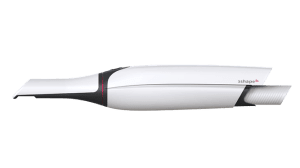
An intraoral scanner is a compact, hand-held device that captures high-resolution, 3D images of the interior of a patient’s mouth. This digital tool quickly scans the teeth and gums, creating a virtual model of the mouth that can be used for various diagnostic and treatment planning purposes, including the fabrication of dental restorations, orthodontic solutions, and more. The accuracy and efficiency of intraoral scanners stem from their ability to produce immediate digital dental impressions, which can be easily shared with laboratories or used in conjunction with CAD/CAM (Computer-Aided Design/Computer-Aided Manufacturing) technology for on-site restoration creation.
Key features that set intraoral scanning technology apart include:
– Non-Invasive Dental Scanning: Unlike traditional impression methods that can cause discomfort or gagging, intraoral scanners are non-invasive. The device simply hovers over the teeth, making the process much more comfortable for patients.
– Precision Dental Imaging: Intraoral scanners offer unparalleled accuracy in dental imaging. They capture detailed 3D images that enhance the quality of dental care, from diagnosis to treatment.
– Efficiency and Speed: The digital impressions are available almost instantaneously, significantly reducing the waiting time for both patients and practitioners. This efficiency streamlines the treatment process, allowing for quicker turnaround times for dental appliances.
– Digital Orthodontics Solutions: Intraoral scanners are integral to digital orthodontics, enabling the design and manufacture of aligners and other orthodontic appliances with exacting precision.
The adoption of intraoral scanners in modern dentistry not only enhances patient comfort and satisfaction but also elevates the standard of care through improved accuracy and efficiency. As such, intraoral scanning technology has become a cornerstone of digital dentistry, setting a new benchmark for dental impressions and paving the way for further innovations in the field.



 Shinning 3D Autoscan DS EX Pro Lab Scanner
 E2 | E3 | E4 Red Generation Lab Scanners
 3shape F8 Lab Scanner
Disclaimer
This article is for general information. Product specifications and features change with the manufacturer — confirm details with our team before you buy. Full disclaimer