

Importance of Dental Photography
Dental photography plays a crucial role in modern clinical practice, offering both diagnostic and educational value. By capturing clear, detailed images of a patient’s oral condition, dentists can document changes over time, compare pre- and post-treatment results, and track the progress of treatments. These images serve as vital records, improving the accuracy and quality of clinical documentation, which is essential for both legal purposes and insurance claims.
Beyond documentation, dental photography significantly enhances patient communication. Visual aids help patients better understand their oral conditions and the recommended treatments, making complex dental procedures more relatable. Showing patients the before-and-after images can also increase their trust in the proposed treatments, as they can see the tangible benefits for themselves.
Achieving high-quality dental images requires the use of the right tools and techniques. From selecting the correct camera and lenses to mastering lighting and intraoral positioning, dental professionals must invest in proper equipment and develop their photography skills. Clear and professional images not only improve patient engagement but also elevate the overall quality of care provided in the dental practice. Through effective dental photography, clinicians can ensure accurate documentation and foster stronger patient relationships.
Essential Dental Photography Tools
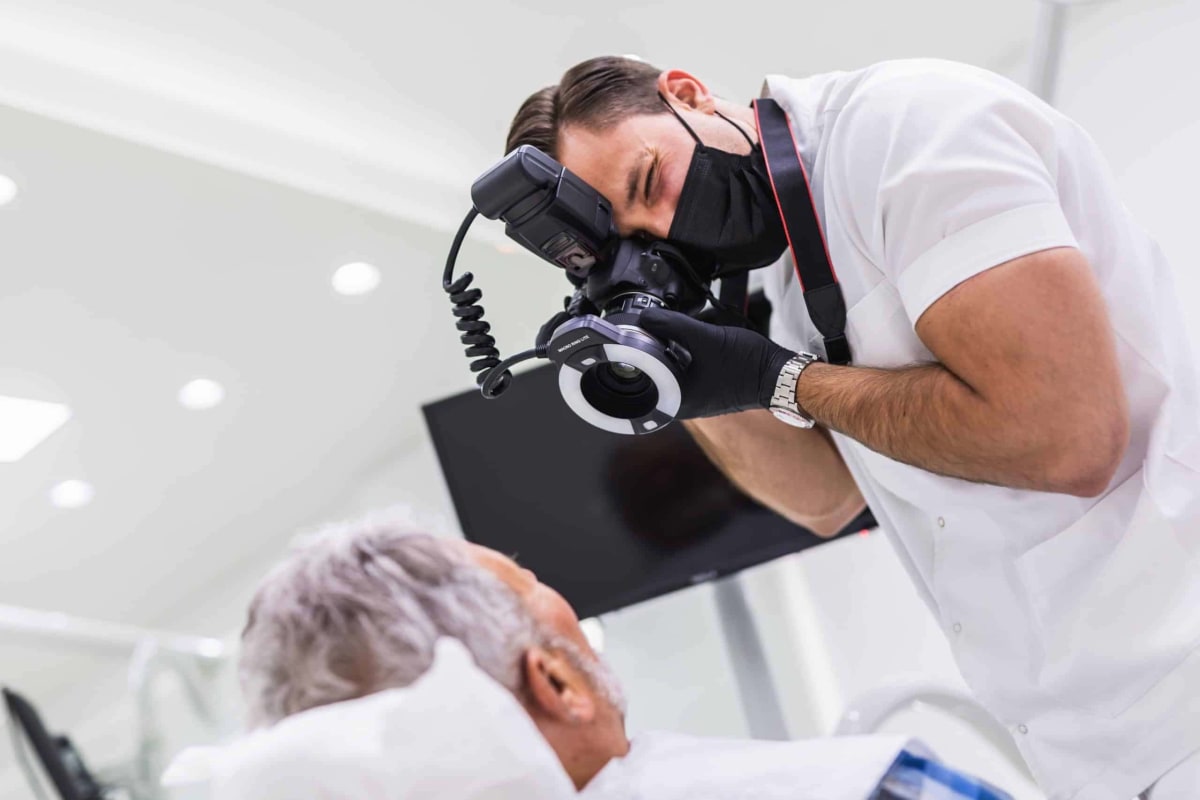
To achieve high-quality images, dental photography requires specific equipment that ensures clarity and precision. The core tools include cameras, lenses, lighting accessories, and mirrors, all designed to capture detailed intraoral and extraoral shots. Digital Single-Lens Reflex (DSLR) cameras are commonly used in dental practices due to their superior image quality, versatility, and control over camera settings.
When selecting a dental camera, look for features that offer clarity and precision, such as high resolution, manual mode capabilities, and macro lenses. Macro lenses, typically in the 85mm to 105mm range, are essential for dental photography, as they allow close-up shots of teeth and oral structures while maintaining sharp focus.
In addition to the camera and lens, accessories like intraoral mirrors, cheek retractors, and dental photography rings are vital for achieving clear, well-lit images. Ring flashes or dual-point flashes help eliminate shadows and ensure even lighting, which is crucial for capturing the fine details of a patient’s oral health.
Investing in the right dental photography tools is essential for producing professional results. High-quality images not only enhance clinical documentation but also support better diagnosis and treatment planning. By using the correct equipment, dental professionals can create detailed and clear images that improve patient understanding and contribute to better outcomes in dental care.

 Shinning 3D Autoscan DS EX Pro Lab Scanner
 E2 | E3 | E4 Red Generation Lab Scanners
 3shape F8 Lab Scanner
Disclaimer
This article is for general information. Product specifications and features change with the manufacturer — confirm details with our team before you buy. Full disclaimer