

On this page
Introduction: The Evolution of Dental Radiography
Indian dentistry has undergone a radical transformation in how we visualize the oral environment. For decades, the OPG was our “eye in the sky,” but it essentially offered a flat, two-dimensional map of a complex 3D landscape. While film-based X-rays were our foundation, they often forced us into “diagnostic guesswork” due to superimposition—where a dense bone structure could easily hide a periapical lesion or a fractured root.
By 2026, the transition to digital sensors and CBCT has moved us from the “darkroom era” into the age of diagnostic certainty. We are no longer waiting for films to dry; we are looking at volumetric data in real-time. This isn’t just a hardware upgrade; it’s a total shift in clinical mindset. Understanding the CBCT machine price in India is now the first step for many BDS and MDS practitioners toward a “3D-first” practice. By capturing hundreds of data points in a single rotation, CBCT allows you to “dissect” the patient’s anatomy digitally, ensuring that no hidden canal or nerve path is left to chance.
Dimensional Accuracy: 2D OPG vs. 3D CBCT
When we weigh cbct vs opg, the real conversation is about the “Dimensional Gap.” A traditional OPG is a panoramic workhorse, but it has a built-in flaw: magnification and distortion. Because it projects a curved jaw onto a flat sensor, the measurements are never truly 1:1. This is a massive risk factor in implantology where every half-millimeter matters for primary stability.
CBCT technology solves this by using isotropic voxels—microscopic, equal-sided data cubes—to mirror the patient’s exact anatomy. In any dental xray comparison, CBCT wins on spatial truth. An OPG might suggest there’s enough bone height for an implant, only for you to find a narrow ridge during surgery. CBCT reveals that buccolingual width long before you pick up the handpiece. By eliminating the “ghost images” of the spine that often blur 2D anterior views, you get a digital roadmap that finally matches clinical reality.
Clinical Applications: When to Choose Which?
The choice between cbct vs opg isn’t about which is “better,” but which is right for the task at hand. An OPG remains a fantastic screening tool. For a routine check-up, an ortho-screening, or a quick look at wisdom tooth impactions, it’s fast and keeps radiation doses minimal. It’s the broad-brush stroke of dental diagnostics.
However, once you move into the “high-precision zone,” OPG falls short. For Implantology, CBCT is effectively mandatory in 2026. You need to see bone density and the exact proximity of the mandibular canal. Similarly, in Endodontics, a CBCT acts as a microsurgical guide, helping you find that elusive MB2 canal or identifying a vertical root fracture that a 2D periapical would miss entirely. By understanding this dental xray comparison, you can use OPG for daily triage and reserve your CBCT for the high-stakes cases where precision is the only path to success.
Setting the Gold Standard: Advanced 3D Volumetric Imaging

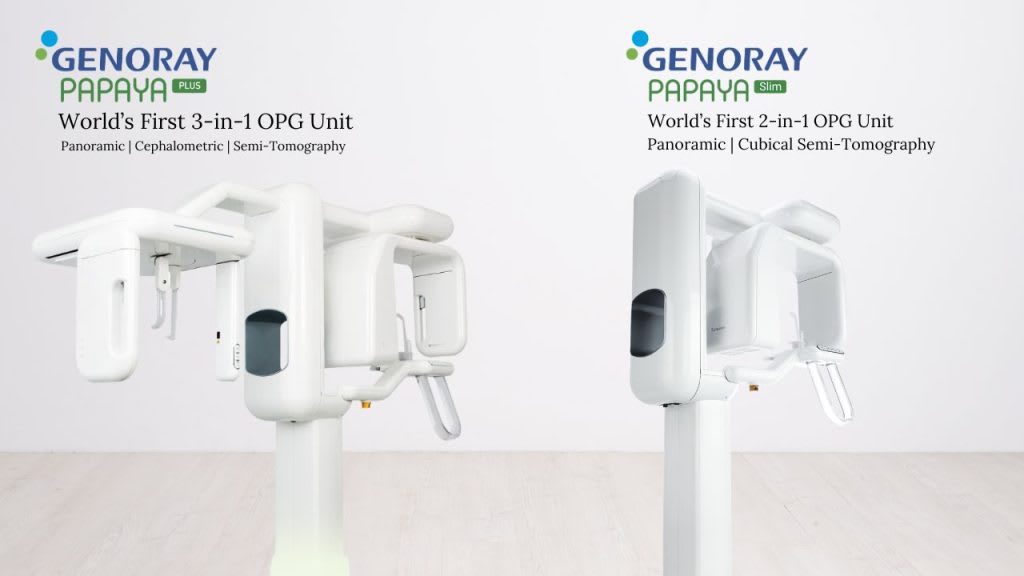 Dental OPG – GENORAY PAPAYA CUST
 Dental CBCT Machine – Genoray PAPAYA 3D PLUS
 Dental CBCT Machine – GENORAY PAPAYA 3D PREMIUM PLUS
 Genoray Port X-II
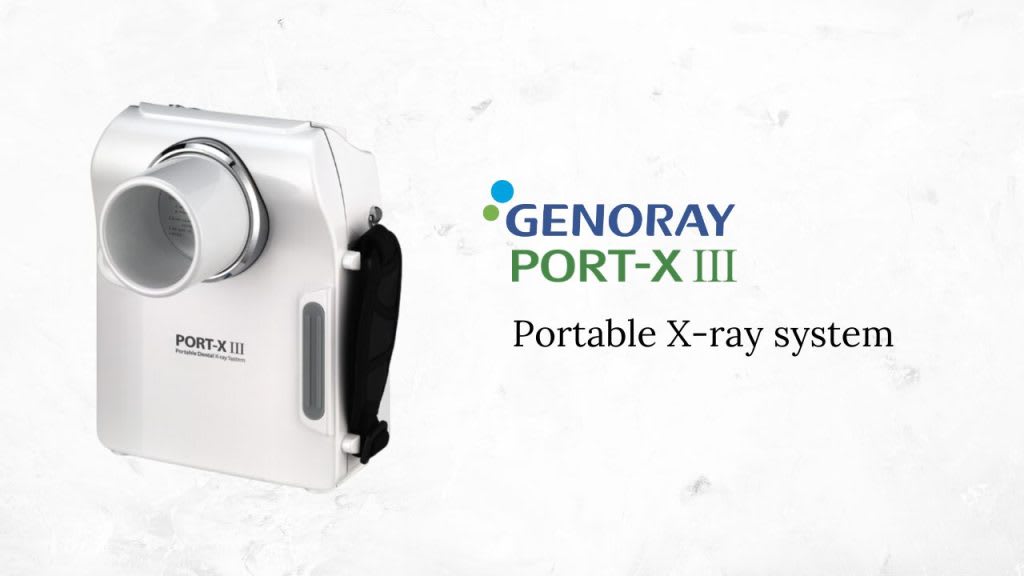 Genoray Port X-III
 Runyes Portable X-ray
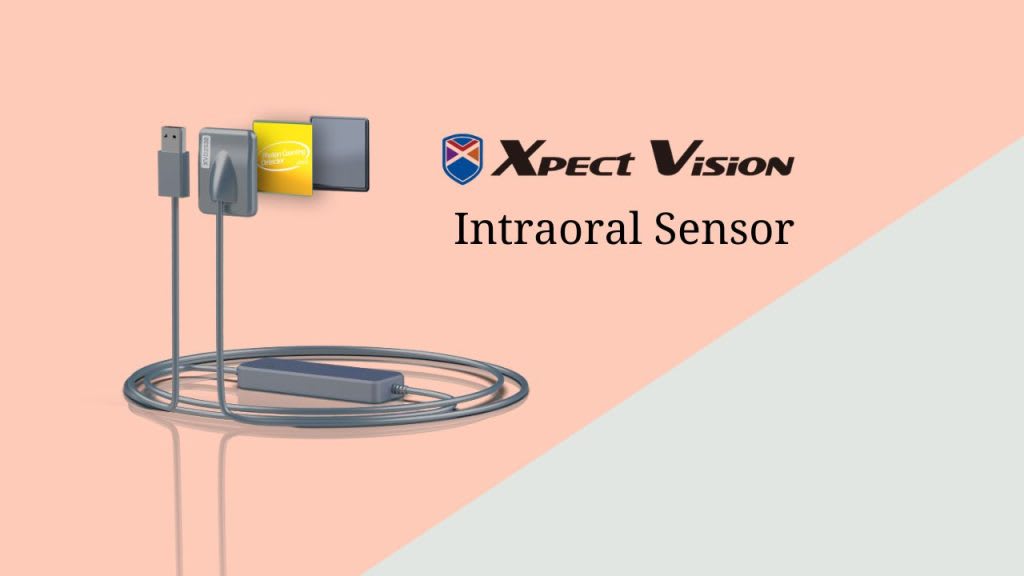 Xpect Vision Intraoral Sensor
 Carestream RVG CS 5200
 Gnatus Timex 70 E AC X-Ray Machine
Disclaimer
This article is for general information. Product specifications and features change with the manufacturer — confirm details with our team before you buy. Full disclaimer