

On this page
More than any other specialty, dental lasers play a crucial role in oral surgeries. Lasers are becoming standard care for many procedures performed by oral surgeons. The chief reason behind this being is that many procedures can be executed more efficiently and with less morbidity. This can be achieved by using lasers compared to scalpel, cautery or high frequency devices. The oral surgeries procedures are routine for practicing surgeons, and hence lasers can be used as a better tool to facilitate the same goals. This is the reason to switch to lasers for surgery.
Many new procedures have been developed to take advantage of using lasers, which can’t just be finished using only lasers, because there is no analogous to conventional surgical instruments. On the other side there are dental procedures that although are possible with other modalities which have become popular to be performed using lasers because of its inherent advantages. Earlier lasers were too bulky and hence were being used only in major operations, but now due to its ease of use, compact size, and portable size, they can be used to treat minor routine procedures in clinics.
Is Diode lasers in Oral Surgical procedures safe?
The excellent field visibility, hemostasis, precision, enhanced infection control and elimination of bacteria makes use of lasers beneficial. There is lack of mechanical tissue trauma, reduced postoperative pain, edema, reduced scarring and tissue shrinkage. The number of instruments required at site of surgery are less, asepsis is maintained due to non- contact tissue ablation and prevention of tumor seeding.Is Dental laser surgery painful?
The hemostatic nature of lasers is of great value in Oral and Maxillofacial (OMF) surgeries. It allows for surgery to be performed more precisely and accurately because of increased visibility of surgical site cases like removal of hemangioma, epulis or any procedure involving incision on tongue, soft palate or tonsil requires a bloodless field for sharp and precise incision. This can be achieved using lasers giving a bloodless field. Decreased post operative swelling is characteristic of lasers and allows increased safety when performing surgery within the airway and increased range of surgery that can be performed safely without fear of airway compromise. There is excellent tissue healing due to a combination of decreased collateral tissue damage, less traumatic surgery, more precise control of depth of tissue damage and lesser myofibroblast in laser wounds. Use of diode lasers in dentistry , heals wounds with minimal scar formation and no residual tissue. This way wounds don’t need suturing which again acts as an advantage and lessens patients recalls. The decreased postoperative pain is due to decreased tissue trauma and alteration of neural transmission. This aspect has enabled surgeons to perform many procedures where patients can return to their work within 1 day or at times immediately. Hollow waveguide technology and fibre optics makes lasers accessible to almost any area in the oral cavity, even those where conventional technique use wouldn’t be possible.Diode lasers Dental can be useful in various oral surgery treatment:
Diode lasers are small and compact, hence can be stacked to produce considerable output powers. The active material is semi-conducting crystal, usually gallium arsenide. The beam from diode lasers is usually more divergent, requiring additional optics to produce collimated output. Dental Diode lasers are good for excising benign soft lesions. Blood vessels smaller than 0.5mm in diameter are sealed spontaneously, allowing excellent visibility and precision. There is minimal cellular damage adjacent to the plane of excision. This facilitates good wound healing and it also means that specimens can be removed without distortion, enabling for accurate histological diagnosis. Laser technology has made rapid progress and found a niche in surgical specialties. Because of several advantages, lasers have become indispensable in OMF surgery as an additional modality for soft tissue surgeryRelated Products
 Biolase Soft Tissue Laser – Epic X
 BIOLASE Waterlase iPlus All Tissue Laser
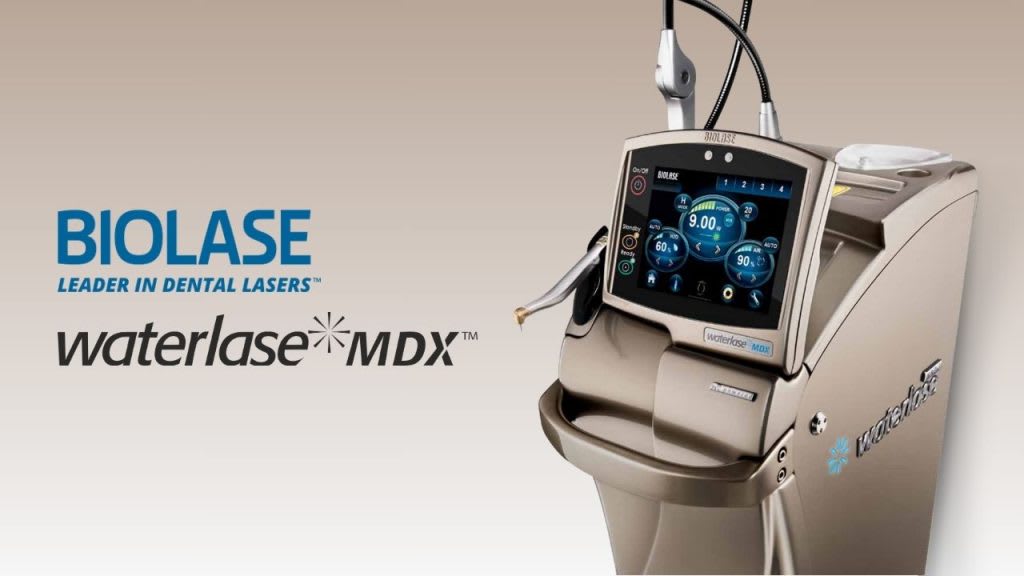 BIOLASE Waterlase MDX All Tissue Laser
Disclaimer
This article is for general information. Product specifications and features change with the manufacturer — confirm details with our team before you buy. Full disclaimer