

On this page
Introduction — Why Laser Dentistry Now
Laser dentistry has moved from niche to everyday because it solves three routine problems at once: precision, speed, and comfort. By delivering energy exactly where it’s needed—and sparing surrounding tissue—modern dental laser treatments help you cut, coagulate, or decontaminate with remarkable control. The clinical upshot is cleaner margins, less bleeding, and smoother post-op recovery—key pillars of pain-free dentistry positioning.
Where does it fit in your toolkit? Think “adjunct,” not “replacement.” Advanced dental laser technology sits alongside handpieces and scalers to streamline common tasks: troughing without cord, bloodless gingival recontouring, peri-implantitis decontamination, aphthous ulcer relief, and low-aerosol debridement. On hard tissues, selective ablation supports minimally invasive caries removal and conditioning—enabling a conservative approach to a laser dental filling when indicated—while soft-tissue protocols cover frenectomies, gingivectomies, and biostimulation.
For the operatory, that means fewer injections in many cases, clearer fields, and shorter chairtime. For patients, it means quieter visits, faster healing, and higher acceptance of recommended care. Integrated correctly—with eye protection, smoke evacuation, and indication-specific settings—lasers complement traditional methods, raising the clinical ceiling for both soft tissue laser dentistry and hard tissue laser dentistry. In short, this is the moment to make lasers a standard option in routine care, not a special-occasion tool.
Clinical Indications: Soft vs. Hard Tissue
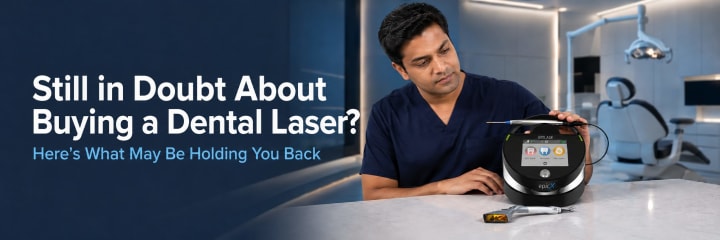
Soft tissue laser dentistry. For everyday soft-tissue work, a diode like the Biolase Epic X Soft Tissue Laser excels at precise cutting and rapid coagulation. Typical indications include frenectomy, gingivectomy/gingivoplasty, operculectomy, and peri-implantitis decontamination. In hygiene and perio, a dental laser for gum treatment can aid bacterial reduction, inflammation control, and pocket depth management alongside SRP. Biostimulation/photobiomodulation protocols support aphthous ulcer relief and post-op comfort, while laser hemostasis keeps the field dry for impressions, scanning, and bonding.
Hard tissue laser dentistry. For enamel and dentin, all-tissue platforms such as the Biolase Waterlase iPlus Hard Tissue Laser enable selective ablation with minimal vibration and heat. Use cases include conservative caries removal, enamel/dentin conditioning, sensitivity management, and localized osseous recontouring around crown lengthening sites. In laser dental filling workflows, you can debride, condition, and restore in a single appointment; many cases require little or no anesthesia, which streamlines pediatric and anxious-patient care.
Workflow tips.
- Match parameters and tips to indication; document settings in the chart.
- Combine soft-tissue protocols for troughing and hemostasis with intraoral scanning to improve margin clarity.
- For hard-tissue prep, confirm cavosurface design and adhesion with your bonding system’s IFU.
Bottom line: pairing Epic X for soft tissues with Waterlase for enamel/dentin lets you cover the full spectrum—from pocket decontamination to minimally invasive restorations—making laser dentistry a predictable, patient-pleasing adjunct to your daily armamentarium.

Patient Experience & Outcomes
Patients feel the difference with laser dentistry because much of the discomfort comes from pressure, vibration, heat, and bleeding—precisely what lasers minimize.
- Less anesthesia (in many cases). Selective ablation and coagulation mean fewer injections for small soft-tissue procedures and conservative hard-tissue preps—great for pediatrics, anxious adults, and busy professionals.
- Reduced bleeding & edema. Immediate hemostasis keeps the field dry, improves visibility, and shortens appointments. Patients report cleaner post-op experiences and fewer dressing changes.
- Faster healing. Low collateral damage plus biostimulation protocols can support quicker epithelialization and gentler recovery—fewer post-op calls and analgesics.
- Lower aerosol generation. Compared with high-speed handpieces, many dental laser treatments produce less spatter/aerosol, helping with operatory hygiene (protocols still apply).
- Precise margins and soft-tissue control. Bloodless troughing and sculpting around margins improve scan/impression quality, reduce retraction cord use, and aid bonding.
- Comfort = acceptance. Quieter, gentler visits support a pain-free dentistry brand promise, lifting case acceptance for esthetic recontouring, peri-implant maintenance, and minimally invasive restorations.
Clinical guardrails: case selection and settings matter. Follow wavelength-specific protocols, protect eyes, evacuate plume, and document parameters. Used as an adjunct to traditional tools, lasers consistently deliver shorter chairtime, cleaner operative fields, and happier patients—the outcomes that keep them returning and referring.

 Biolase Soft Tissue Laser – Epic X
 BIOLASE Waterlase iPlus All Tissue Laser
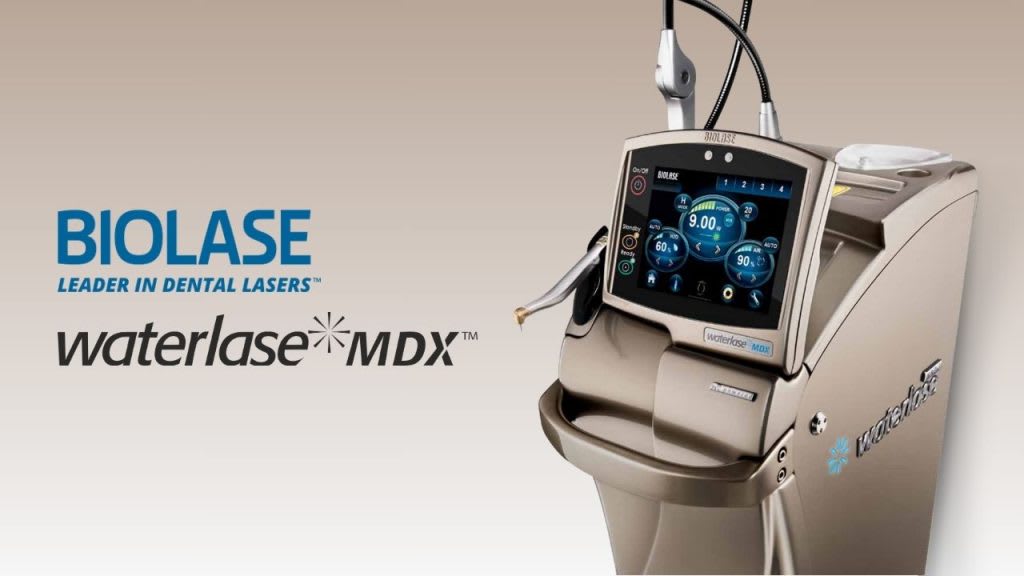 BIOLASE Waterlase MDX All Tissue Laser
Disclaimer
This article is for general information. Product specifications and features change with the manufacturer — confirm details with our team before you buy. Full disclaimer