

On this page
Introduction: The Paradigm Shift in Indian Dentistry
For generations, the sensory hallmark of an Indian dental clinic was the high-pitched whine of the airotor and the sight of a scalpel. This traditional “cut-and-sew” approach, while clinically sound, often induced a deep-seated anxiety in patients, leading to delayed treatments and cancellations. However, the landscape is shifting.
Today’s patient—whether in a metro like Mumbai or a developing Tier-2 city—is digitally empowered. They consume content on Instagram and YouTube, leading them to actively seek out “painless,” “minimally invasive,” and “needle-free” treatments. They question why recovery should take weeks when modern technology promises days. In this new era, the clinician relying solely on the blade risks obsolescence.
This is where “Light over Blade” becomes a clinical necessity rather than just marketing jargon. Integrating lasers is not about buying a luxury gadget; it is about fundamentally upgrading the patient experience—swapping a bleeding surgical site for a dry, coagulated field. This guide cuts through the hype to offer an evidence-based look at the physics and safety of laser dentistry, helping you make an informed choice.
The Physics of Precision: Diode vs. Erbium
To select the right tool, one must understand the target. The confusion for many general practitioners lies in the “wavelengths,” but the distinction is actually simple physics: Chromophores.
- Erbium Lasers (The Hard Tissue Specialist): Operating at 2780 nm (Er,Cr:YSGG) or 2940 nm (Er:YAG), these lasers have a massive affinity for water and hydroxyapatite. When the beam hits the tooth, the water molecules inside the enamel and dentin absorb the energy and expand instantly. This “micro-explosion” flakes away the hard tissue. Essentially, it is an optical drill that cuts bone and cavities without the heat or vibration of a bur. However, the higher cost often makes this a Stage-2 investment for clinics.
- Diode Lasers (The Soft Tissue Workhorse): These operate in the near-infrared spectrum (810nm, 940nm, 980nm). Unlike Erbium, diodes are ignored by enamel. instead, they actively seek out pigment—specifically hemoglobin and melanin. The energy is absorbed by the blood and tissue, converting to heat. This allows the laser to precisely ablate soft tissue while simultaneously sealing blood vessels.
For the majority of Indian dentists, the diode laser is the perfect entry point. It transforms messy soft-tissue surgeries into clean, dry, and visible procedures.
Clinical Reality: The “Clinical ROI” of Lasers
When discussing Return on Investment (ROI), we must look beyond money to “Clinical ROI”—the reduction of chairside stress and the improvement of procedural quality.
- The Hemostatic Advantage: Every clinician knows the frustration of a Class V restoration or frenectomy where gingival bleeding compromises the bond or visibility. A scalpel cuts, but leaves you fighting the blood. A diode laser cuts and seals simultaneously. This creates an immediate dry field, allowing for instant impressions or scanning without the need for retraction cords or chemical hemostats.
- Anesthesia-Free Dentistry: This is a massive practice builder. Because diode lasers seal nerve endings (neuromas) and avoid the mechanical trauma of steel tools, many superficial procedures (like fibroma removal or operculectomy) can be done with just topical gel. For pediatric patients, the “needle-free” experience is magical, turning a fearful child into a cooperative patient.
- Accelerated Healing: Laser wounds heal by “secondary intention,” covered by a unique biological bandage called a fibrin clot. Evidence suggests this significantly reduces post-operative swelling (edema) and trismus, allowing you to prescribe fewer antibiotics and painkillers.
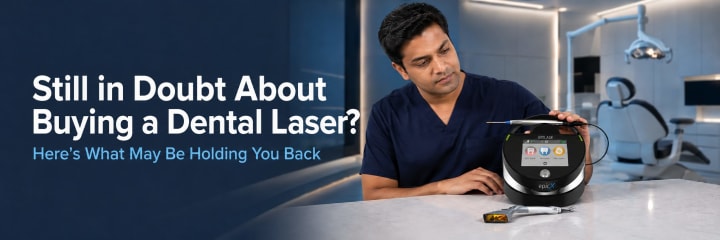
The 940nm Advantage: Why Biolase Epic X Stands Out


 Biolase Soft Tissue Laser – Epic X
 BIOLASE Waterlase iPlus All Tissue Laser
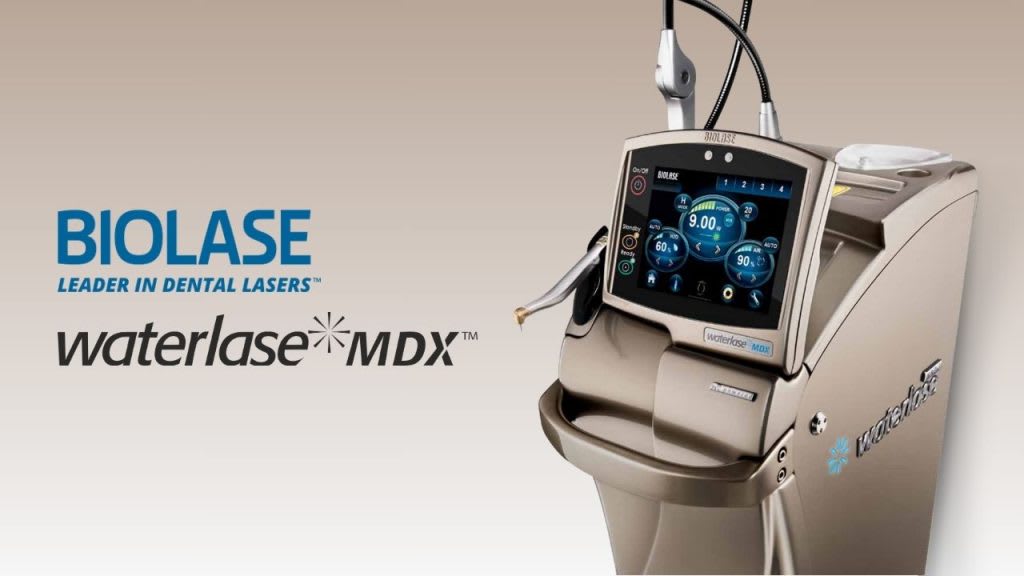 BIOLASE Waterlase MDX All Tissue Laser
Disclaimer
This article is for general information. Product specifications and features change with the manufacturer — confirm details with our team before you buy. Full disclaimer