Pan-India sales & serviceSales +91 98211 84441Showrooms in 6 cities
Laser Dentistry

Dental Laser Machine Price in India – Uses & Cost

Dr.Vijay

5 min read

Dental Laser Machine Price in India – Uses & Cost

Introduction: The Shift to Bloodless and Painless Dentistry

The year 2026 has seen a definitive shift toward minimally invasive care, with the dental laser machine leading the charge in modern Indian clinics. Patients no longer want the “vibration and noise” of the drill; they are actively seeking out the precision and comfort that only light-based technology can provide. Integrating a soft tissue laser into your operatory isn’t just about keeping up with trends—it’s about fundamentally changing the patient’s surgical experience. This section introduces how lasers are effectively replacing the traditional scalpel, offering a “bloodless” environment that speeds up healing and significantly reduces chairside anxiety for the modern dental patient.

By sealing nerve endings and lymphatic vessels as it cuts, the laser minimizes immediate pain and post-operative swelling, often eliminating the need for sutures entirely. For Indian practices, this means fewer post-op calls and a major boost in “word-of-mouth” referrals from patients who were surprised by how easy their recovery was. In an era of high patient awareness, offering a “quiet, needle-free” experience is a powerful way to stand out in a crowded market.

Decoding the Cost: Factors Influencing Dental Laser Prices

Dental Lasers Category Banner
  • Biolase Epic XBiolase Soft Tissue Laser – Epic X
  • Biolase Waterlase iplusBIOLASE Waterlase iPlus All Tissue Laser
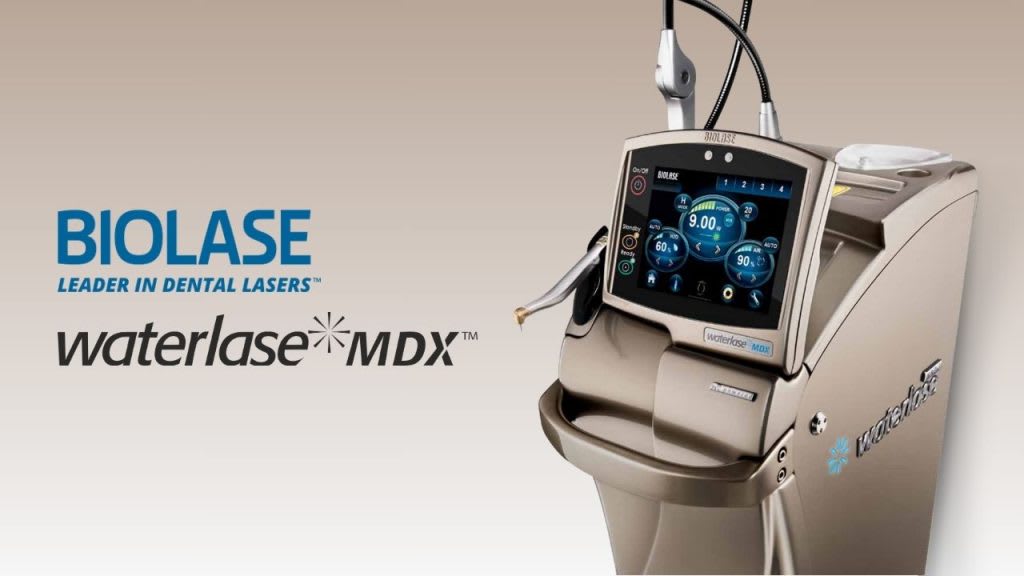
  • Biolase Waterlase MDXBIOLASE Waterlase MDX All Tissue Laser

Disclaimer

This article is for general information. Product specifications and features change with the manufacturer — confirm details with our team before you buy. Full disclaimer
The trust we’ve earned

Dentists across India on working with Unicorn DenMart.

After years of use, Shining 3D Aoralscan 3 stands out as a dependable intraoral scanner that helps clinics move from conventional impressions to a faster, cleaner and more confident digital workflow.
Dr. Divij KhullarMDS Prosthodontics, FFPA (USA), World Record Holder, BPS Specialist – Ivoclar Switzerland
Unicorn DenMart Ltd
4.9
Based on 6,050 reviews
powered by Google
review us on
Read more reviews

Frequently Asked Questions (FAQs)

Think of the diode laser as your clinical “cheat code” for soft tissue. Instead of reaching for a scalpel and worrying about sutures, you use the laser for bloodless gingivectomies, frenectomies, and operculectomies.

Beyond the surgery, it’s a massive practice-builder for 20-minute power whitening and “decontaminating” deep periodontal pockets. It’s also the fastest way to treat a painful aphthous ulcer or sensitive tooth—providing instant relief that leaves patients raving about your “high-tech” touch.

For a top-tier unit like the Epic X in India, you’re looking at an investment of roughly ₹3.2 Lakhs to ₹3.9 Lakhs.

  • The Reality: While unbranded lasers are half the price, they often lack the pulse control needed to prevent “charring” the gums.
  • Running Costs: These are incredibly low. You’re mainly just paying for disposable fiber tips and the whitening gel. It’s an “expensive to buy, cheap to run” asset.

The math is simple: it turns “referred-out” cases into “in-house” cash flow.

  • Premium Billing: Patients happily pay a 30-50% markup for “No-Blade, No-Blood” surgery.
  • Time is Money: A frenectomy that used to take 20 minutes (including suturing) now takes under 5.
  • The “Wow” Factor: Being the “Laser Dentist” in your pin code is a powerful marketing tool that usually pays for the machine within the first year of consistent use.

In a compact Indian clinic, laser safety is non-negotiable.

  • Eye Protection: Everyone in the room—including the patient—must wear OD4+ rated goggles. Standard sunglasses won’t stop an infrared beam from causing permanent retinal damage.
  • Tissue Protection: High-end lasers use “ComfortPulse” technology. This micro-pulsing gives the tissue a “rest” between energy bursts, meaning most patients won’t even need a local anesthetic.